
Italy Tours & Vacation Packages 2024/2025
Save up to 40% on Italy Tours & Vacation Packages 2024/2025
Italy Travel GuideBenvenuto! An Italy tour is the best way to experience your next vacation to Italy. Whether you want to trace history in Rome, taste wines in Tuscany, shop in Milan, drive the scenic Amalfi Coast, or explore the canals of Venice, we have all the Italy tours for you. On your Italy tour, visit some of Italy's most popular cities with a dedicated tour director to manage all your included travel plans and meet local tour guides in each city to get intimate knowledge of every site you visit. With tour operator volume buys plus our low everyday prices you can save up to 40% versus assembling the same itinerary on your own! Book your Italy tour today with AffordableTours.com, your discounted tour headquarters. View Italy Tour Deals and Discounts
Italy Travel Guide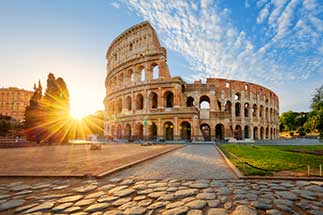
| Tour Itinerary | Days | Operator | Quality | Style | Starts | Ends | Price | |||
|---|---|---|---|---|---|---|---|---|---|---|
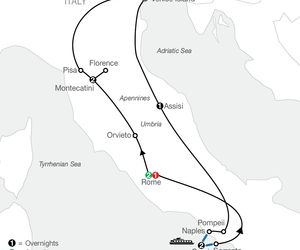 | The Best of Italy 2024 598 reviews | 11 Days | Globus | Escorted | Rome | Rome | Italy | -12% From: $4,299 $3,799You Save: $500 View Tour Best Price Guaranteed Book With Flexibility | ||
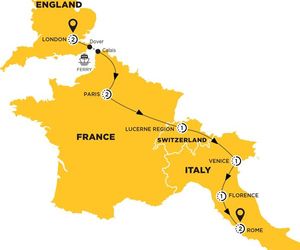 | London to Rome Highlights 82 reviews | 10 Days | Costsaver | Escorted | London | Rome | England, France, Italy, Switzerland | -16% From: $2,550 $2,150You Save: $400 View Tour Best Price Guaranteed Book With Flexibility | ||
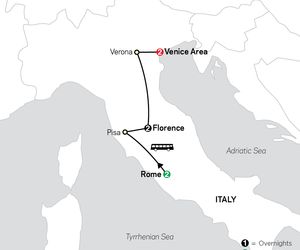 | Rome, Florence & Venice 2024 120 reviews | 07 Days | Cosmos | Escorted | 3 - Explorer | Rome | Venice | Italy | -22% From: $1,539 $1,199You Save: $340 View Tour Best Price Guaranteed Book With Flexibility | |
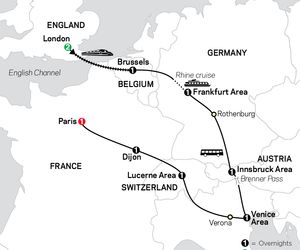 | Seven Countries, Venice & Paris 2024 146 reviews | 10 Days | Cosmos | Escorted | 3 - Explorer | London | Paris | Austria, Belgium, England, France, Germany, Italy, Switzerland | -14% From: $2,439 $2,099You Save: $340 View Tour Best Price Guaranteed Book With Flexibility | |
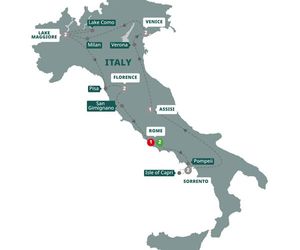 | Best of Italy 534 reviews | 13 Days | Trafalgar | Escorted | Rome | Rome | Italy | -28% From: $5,250 $3,795You Save: $1,455 View Tour Best Price Guaranteed Book With Flexibility | ||
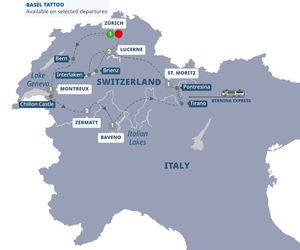 | Best of Switzerland 82 reviews | 09 Days | Trafalgar | Escorted | Zurich | Zurich | Italy, Switzerland | -10% From: $4,050 $3,645You Save: $405 View Tour Best Price Guaranteed Book With Flexibility | ||
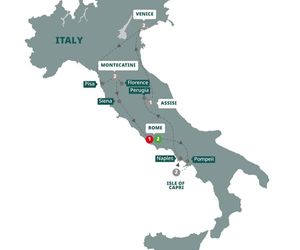 | Italy Bellissimo 110 reviews | 11 Days | Trafalgar | Escorted | Rome | Rome | Italy | -23% From: $4,295 $3,325You Save: $970 View Tour Best Price Guaranteed Book With Flexibility | ||
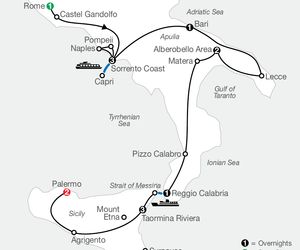 | Highlights of Sicily & Southern Italy 2024 228 reviews | 14 Days | Globus | Escorted | Rome | Palermo | Italy | -24% From: $5,129 $3,899You Save: $1,230 View Tour Best Price Guaranteed Book With Flexibility | ||
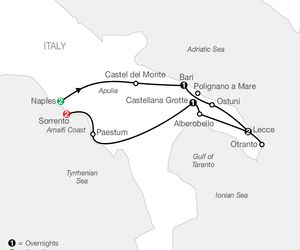 | Hidden Treasures of Southern Italy 2024 18 reviews | 09 Days | Globus | Escorted | Naples | Sorrento | Italy | -19% From: $2,699 $2,199You Save: $500 View Tour Best Price Guaranteed Book With Flexibility | ||
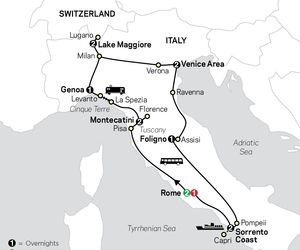 | Italy's Best 2024 238 reviews | 14 Days | Cosmos | Escorted | 3 - Explorer | Rome | Rome | Italy, Switzerland | -7% From: $3,069 $2,839You Save: $230 View Tour Best Price Guaranteed Book With Flexibility | |
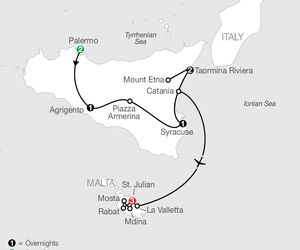 | Sicilian Escape with Malta 2024 2 reviews | 10 Days | Globus | Escorted | Palermo | St. Julian's | Italy, Malta | -23% From: $2,869 $2,199You Save: $670 View Tour Best Price Guaranteed Book With Flexibility | ||
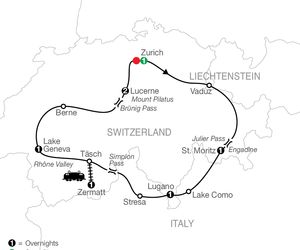 | The Best of Switzerland 2024 294 reviews | 08 Days | Globus | Escorted | Zurich | Zurich | Italy, Liechtenstein, Switzerland | -5% From: $3,379 $3,209You Save: $170 View Tour Best Price Guaranteed Book With Flexibility | ||
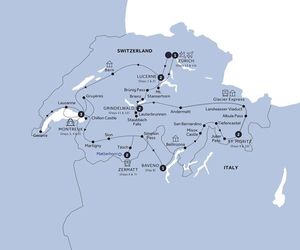 | Country Roads of Switzerland - Classic Group 16 reviews | 14 Days | Insight Vacations | Escorted | 5+ years old | 40 | Zurich | Zurich | Italy, Switzerland | -22% From: $7,496 $5,819You Save: $1,677 View Tour Best Price Guaranteed Book With Flexibility |
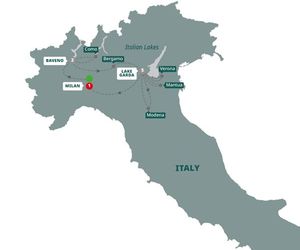 | Best of the Italian Lakes 14 reviews | 09 Days | Trafalgar | Escorted | Milan | Milan | Italy | -14% From: $3,150 $2,695You Save: $455 View Tour Best Price Guaranteed Book With Flexibility | ||
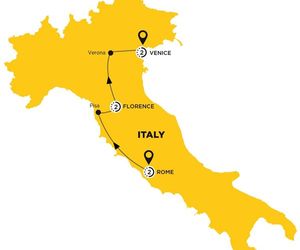 | Jewels of Italy 225 reviews | 07 Days | Costsaver | Escorted | 1 - Light | Rome | Venice | Italy | -20% From: $1,625 $1,295You Save: $330 View Tour Best Price Guaranteed Book With Flexibility | |
 | 12 Day Enchanting Italy with Amalfi - Tuesday Departure 22 reviews | 12 Days | Gate1 | Escorted | Venice | Naples | Italy | $3,099View Tour Best Price Guaranteed Book With Flexibility | ||
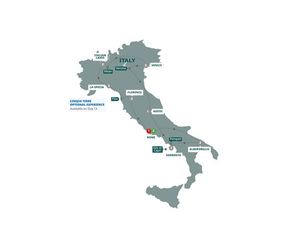 | Grand Italian Experience 26 reviews | 17 Days | Trafalgar | Escorted | Rome | Rome | Italy | -17% From: $5,850 $4,875You Save: $975 View Tour Best Price Guaranteed Book With Flexibility | ||
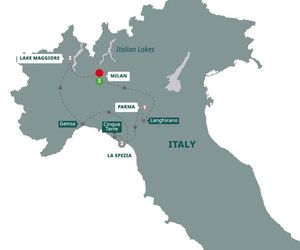 | Northern Italy including Cinque Terre 54 reviews | 08 Days | Trafalgar | Escorted | Milan | Milan | Italy | -18% From: $2,675 $2,195You Save: $480 View Tour Best Price Guaranteed Book With Flexibility | ||
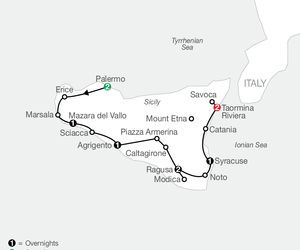 | The Sicilian 2024 41 reviews | 10 Days | Globus | Escorted | Palermo | Catania | Italy, United States | -19% From: $2,959 $2,399You Save: $560 View Tour Best Price Guaranteed Book With Flexibility | ||
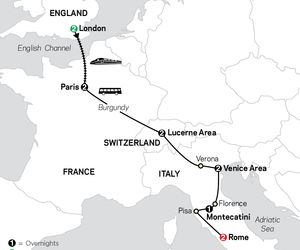 | From St. Paul's to St. Peter's 2024 46 reviews | 12 Days | Cosmos | Escorted | 3 - Explorer | London | Rome | England, France, Italy, Switzerland | -8% From: $2,939 $2,699You Save: $240 View Tour Best Price Guaranteed Book With Flexibility | |
Italy Travel Guide
Italy Tours Highlights
- Step back in time at the Colosseum.
- Throw a coin in the Trevi Fountain.
- Take a picture with the Leaning Tower Of Pisa.
- Take a Gondola ride in Venice.
- Cruise the Amalfi Coast.
- Visit the Vatican and Sistine Chapel.
- See countless works of art like the David, The Last Supper, and the Mona Lisa.
- Take a rowboat tour though the Blue Grotto in Capri.
- People watch in St. Mark's Square in Venice.
- Drink wine in Tuscany.
- Walk around the Cinque Terre.
- Admire the architecture of the Duomo di Milano.
- Relax in the Italian Lake District.
Italy Tours Travel Tips
- Wear sturdy shoes and be prepared for cobbled streets and lots of stairs.
- Hotel rooms are smaller than found in America, and there might not be an elevator.
- Italy is very serious about their food. Plan to spend a lot of time eating meals, sometimes a few hours. It can be considered rude to rush. Some places will charge a per person cover charge.
- Lots of restaurants and stores shut down for ‘riposo' from about 1pm-4pm. Italians like to have a break in the middle of the day. Plan ahead if you were wanting to eat or shop during this time.
- Cars in Italy are very small, and the roads are very narrow. Make sure your luggage will fit. Trains are a popular way to travel.
- Visit famous sites early in the morning to beat the crowds.
- Since Italy is a popular travel destination, keep your valuables close to you. Some people prefer to keep their cash, cards, and passport in a travel pouch under their clothes. Leave expensive jewelry and watches at home and don't accept any ‘free gifts' from merchants.
- Italians drink espresso at the end of meals, never during. Cappuccinos are only for breakfast.
Italy Tours Things To Do
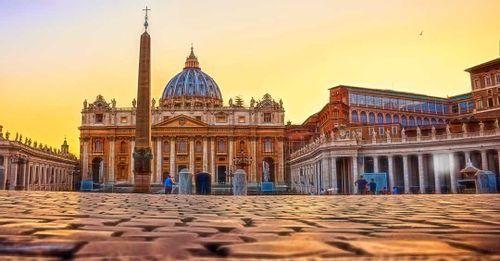 Visit the Vatican and Sistine Chapel
The Vatican Museums located in the Vatican City in Rome offer a look at the immense art collection amassed by popes thought out the years. There are around 20,000 pieces of Roman sculptures and other mostly Renaissances masterpieces on display. Next door is the Sistine Chapel, whose ceiling was famously painted by Michelangelo. This is the site of the papal conclave, which is how they select a new pope. St. Peter's Basilica is also next door and most visitors like to see all three sites.
Best Time to Visit
The Vatican and the Sistine Chapel are 2 of the most visited attractions in Italy and the world. First thing in the morning is your best bet. The line for both places can get very long, we suggest joining a tour that allows you to bypass the line and cut to the front.You Should Know
There is a strict dress code to enter the Sistine Chapel and St Peter's Basilica. Your knees and shoulders must be covered. You can't take pictures everywhere. In the Vatican, there are many places you can snap photos, but you can't in the Sistine Chapel. Since the Sistine Chapel is a place of worship, they ask you to be respectful and not speak while inside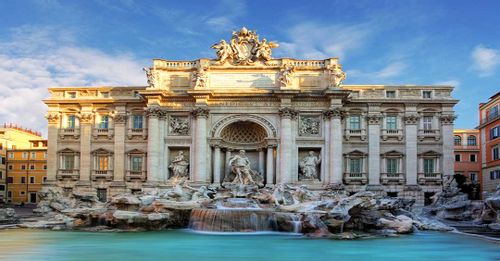 Throw a Coin in the Trevi Fountain
Standing over 26 meters high, the Trevi Fountain is the largest Baroque fountain in Rome and has appeared in several notable movies. The streets convene and mark the final point of Aqua Virgo, which was one of the earliest aqueducts in Rome. The name of the fountain translates to Three Street Fountain.
Best Time to Visit
Travelers should see the fountain twice, once in the daylight and once at night. Both are spectacular. Crowds are hard to avoid but plan to visit right after sunrise for the best view.You Should Know
Legend says, throw a coin over your left shoulder and you'll return to Italy! The money thrown in the fountain is donated to a Catholic charity. The water is not safe to drink and you are not allowed to sit on the edge of the fountain or touch the water.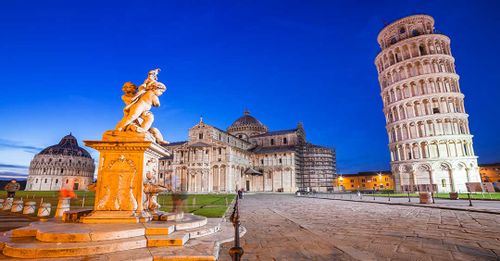 Take a Picture at the Leaning Tower of Pisa
This free-standing bell tower is known for its 4 degree lean because of its unstable foundation. Built-in the 12 th century, the lean got worse and by 1990, the tilt was nearly 6 degrees. Restoration work from 1993- 2001 reduced the tilt to a little less than 4 degrees. Located in Pisa, Italy, this one of the most recognizable structures in the world.
You Should Know
Because the tower was declared stable for the next 200 years, you can still climb the 251 steps to the top of the tower. The word Pisa is a Greek word meaning "marshy land."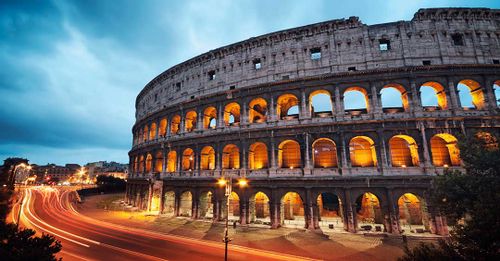 Step Back in Time at the Colosseum
Construction of this huge oval amphitheater began in year 72 and was completed in 80. Holding up to 80,000 people, it was used for gladiatorial contests and was the largest building at the time. Sometimes, water was flooded into the arena so naval reenactments could be performed. In the area, there is a vast underground structure of tunnels, which is still visible today. It is located just east of the Roman Forum and is a very popular tourist destination.
Best Time to Visit
Lots of people like to see it both at night and the day, to get a different experience. Either time you choose, we suggest going on a tour in order to skip the line. The Colosseum is open every day except Christmas Day and New Year's Day. Since this is a top attraction, there are going to be crowds whenever you go. Plan ahead and give yourself enough time. Winter months might have somewhat fewer crowds, especially on non-holiday weekdays.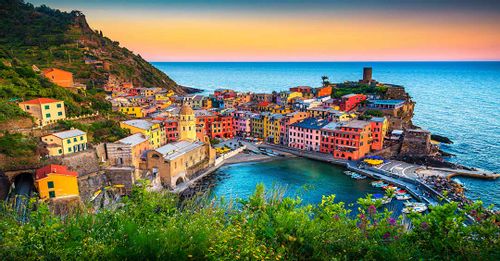 Walk Around Cinque Terre
Located on the northwest coast of Italy, Cinque Terre is made up of five villages and is listed as a UNESCO World Heritage Site. The five villages are also connected by numerous hiking trails, and this allows for easy travel between all of Cinque Terre. Just be sure to pack comfortable shoes, and a light backpack for the scenic walks in each village.
You Should Know
There is no car access once you are inside the five villages. Don't be alarmed, there is a local train called The Cinque Terre Express, that runs from La Spezia through the coast and the boarding pass is only a few Euros.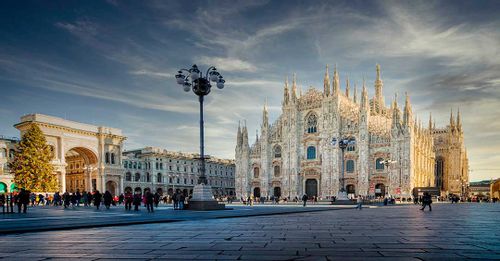 Admire the Duomo Di Milano
The Milan Cathedral is located in Milan and is the largest church in Italy. It took nearly 6 centuries to complete. Full of beautiful colorful stained glass windows and a huge marble staircase, it houses the second largest organ in all of Europe. For a great view of the city, climb to the roof to admire the magnificent buildings surrounding the cathedral and the Pizza del Duomo below.
Best Time to Visit
This top attraction will be crowded, so make sure you go with a tour group or buy your tickets ahead of time. For beautiful colors, we suggest going right before sundown. If it is a clear sunny day, you might be able to see the Alps.You Should Know
Like other Italian churches, you must have shoulders and knees covered. Bring a light scarf to wear as a shawl during the summer months.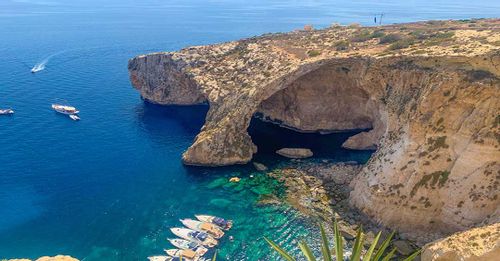 Take a Rowboat through the Blue Grotto
The Blue Grotto is located on the island of Capri. It is a beautiful sea cave that sunlight passes through and creates a blue reflection that illuminates the cavity. The sight is breathtaking and this crystal clear water attraction is one of Capri's most famous places.
Best Time to Visit
The Blue Grotto is usually closed during the winter and can also close at the last minute due to weather conditions. Summer months are peak tourist season, so the wait times won't be as long in the Spring and Fall. No matter what time of the year you go, aim to get to the Grotto between noon and 2 pm because the reflections are the strongest. If it is an overcast day, we suggest saving the Blue Grotto for a sunny day on your trip. Keep in mind that you might have to wait for your turn to enter.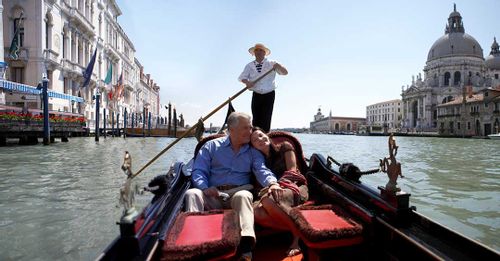 Take a Gondola Ride in Venice
Riding a gondola is one of the top activities in all of Italy. This traditional form of transportation is the best way to get around the 100 small islands in the Adriatic Sea. As you glide down the canals in Venice, the gondolier will sing to you in Italian to really set the mood.
You Should Know
The Grand Canal is the most popular spot for gondola rides. A gondola ride can be just as beautiful at night.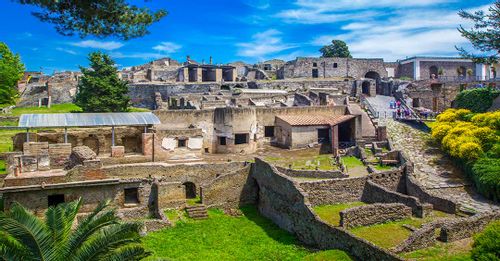 Explore the Ruins of Pompeii
One of the most famous volcano eruptions, Mount Vesuvius exploded in year 79 and covered the small town of Pompeii. You can explore the archaeological ruins for an inside look into the history and how they lived their day to day life. Pompeii is located 14 miles from Naples, south of Mount Vesuvius. A walking tour is the best way to see this very well preserved ancient town.
Best Time to Visit
The winter and spring will have the least amount of crowds. Holiday weekends will bring out more travelers than usual.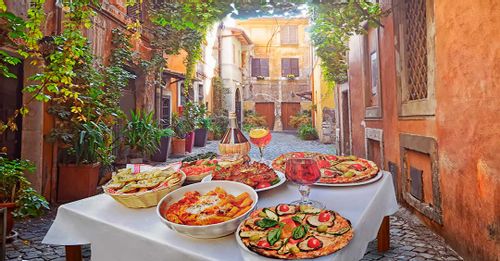 Eat Wonderful Italian Food
Travel to the place where pizza was born and dine on an authentic pie. Neapolitan pizza usually just consists of crust, mozzarella cheese, and tomatoes. Pasta is also a dish all travelers must try. From hearty lasagna to creamy risotto, you won't leave Italy hungry. Let's not forget about another important aspect of an Italian meal, the wine! Tuscany produces some of the world's best wine and it's great to pair with any Italian meal.
You Should Know
Italians like to have a break in the middle of the day so lots of restaurants shut down for ‘riposo' from about 1 pm-4 pm.
Italy Tour Packages
The best time to visit Italy is anytime. With so much to see, do, eat, and hear, there is somewhere for everyone throughout the year. But, depending on where and what region you're visiting, you can definitely optimize your experience based on what you're looking for.
- The most popular time to visit is during the Summer – the weather is warm but the crowds are big.
- The quietest time to visit is during the winter months.
- Ski birds will want to visit from December to March.
- Spring – March to May – Good Season
The average high in Rome during this time is 62F and the average low is 40F. It's still a little cold for most crowds but this is an optimal time to do exactly what you want in the central and southern regions like Rome or Naples.
- Summer – June to August – High Season
The average high in Rome in the summer is 83F and the average low is 58F. You'll notice it can get a little chilly at night so you'll want to bring layers. Summer is the peak season so you'll see a lot of big crowds and long lines. However, if you're traveling with one of our travel partners, you won't have to worry as your dedicated travel director will have tickets to the most popular attractions and you'll be able to skip the line in most cases (inclusions are itinerary specific).
- Fall – September to November – Good Season
The average high in the capital city is 82F and 58F low. Fall is a great time to visit as the crowds are starting to thin and you'll get more of the city to yourself. Popular attractions won't be as crowded and waits won't be too long. It does rain a bit more in the Fall so you'll want to be ready with an umbrella or poncho.
- Winter – December to February – Low Season
The average high in Rome during the Winter is 56F and 38F low. The only people here during this time are skiers looking to hit the slopes in the Italian Alps. It's cold and often wet, and most major attractions close early or are on short winter hours. Although the crowds tend to be really low during this time, the Christmas markets tend to be really popular and draw crowds.
Italy Tours Frequently Asked Questions
- What Are Italy Tours?
Italy tours offer the perfect combination of spectacular scenery, fascinating architecture, world-famous cuisine, and endless attractions. Diving into the culture of the bigger cities of Rome, Florence, Milan, and Venice, Italy tours bring visitors up close and personal to all the popular Italian cities. No trip to Italy is complete without visiting the must-see sights of the Vatican Museums, St. Peter's Basilica and the Colosseum in Rome; St. Mark's Square and Basilica in Venice; and Michelangelo's David in Florence. Travelers quickly see why people from all over the world love taking a trip to Italy.
- What's Included on an Italy Tour?
Many people who want to take Italy vacations choose to join an escorted tour to avoid all the planning and logistics involved. Italy tours are led by a tour director who will take care of all the services from beginning to the end of your Italy tour. Your tour director connects you with local tour guides who will have a lot of knowledge on the specific Italian cities you explore. Usually, hotels in Italy, transportation to and from the airport, some Italian meals, and sightseeing are arranged and included with the price. Italy tours typically include at least a half-day of visiting must-see Italian landmarks in each city you visit to help orient you to the destination and introduce you to some of the most famous sights. The other half of the day is up to you how to you want to spend your time. Would you like free time to explore on your own or maybe take an optional tour for more unique experiences? It's your vacation so it's all up to you!
- What’s The Best Italy Tour?
If you love Italian food, friendly locals, and spectacular scenery, it is easy to have the best Italy vacation! Before you take a trip to Italy, decide if you want to visit the bigger Italian cities, like Rome, Florence, Milan, and Venice or would you prefer to tour Italian destinations that are off the beaten track like, Sicily, Amalfi Coast, Capri, and Naples. With so many marvelous and varied regions, most Italy tours visit a mixture of popular Italian cities and smaller destinations. No matter where you go, Italy tours will not disappoint!
- How Much Do Italy Tours Cost?
You can book an affordable Italy tour starting from under $99 per day per person. Besides our award-winning customer service, the best part about booking with AffordableTours.com is you will always receive a discount on your Italy tour. We are committed to providing you with the lowest prices on all top tour operators. No one beats our prices on all of our Italy tours!
Learn More About Italy Tours
-

It’s Time For a Wellness VacationWellness Tours and Why They Are Growing in Popularity Wellness is a selling point for so many companies, and when it comes to feeling good; you want to be one of the many taking advantage of them. Wellness tours are one of the newest types of tours on the market, and they are offering the…
-
Six Tricks To Eating While Traveling The World
Food is one of the many ways we explore and learn from different cultures. These 6 tricks will help you start eating your way around the world.
-
5 Unique Ways Coffee is Served Around The World
If you love coffee and want to find new flavors to add to your favorite caffeinated drink, here are five unique ways coffee is served around the world.
-

Review: Best Of Italy With TrafalgarThis Best of Italy with Trafalgar trip was one of the best tours that I have done and this Trafalgar tour was the fifth one that I’ve taken with them
-

Review: Northern Italy Including Cinque Terre With TrafalgarNorthern Italy Including Cinque Terre with Trafalgar was far above and beyond what I was expecting. They offer an absolutely exceptional value!
-

Review: European Highlights With GlobusEuropean Highlights with Globus. This is one of the most efficient tours that gives you the highlights of the most popular places in 4 different countries.
-

Review: European Splendor with TrafalgarI would definitely recommend European Splendor with Trafalgar to anyone that has not been to Europe or has never experienced multiple countries on a trip.
-
Explore New Undiscovered Tours With Globus
Visiting unknown cities with undiscovered tours with Globus will capture the true experience of Italy or Britain through hidden gems.
-
A Travel Guide To The Cinque Terre
Located in the northwest coast of Italy, Cinque Terre is made up of five villages, and they all offer different reasons to fall in love with all of them.
-
Dining Etiquette From Around The World
Travelers can be unfamiliar with local dining customs. Here is a handy guide to help you navigate dining etiquette wherever you in the world.
Reviews for Italy Tours and Vacations
Why is there a set cost for gratuity, I thought gratuity means voluntary.
Edwin James O
Excellent tour guide and great meals.
Andrea R
Our experience with the 13 day Gate 1 tour of Croatia Slovenia and Venice was excellent. We recommend it highly.
James W
Attractions
Departure
- 2024 Tours
- 2025 Tours
- 2026 Tours
- Apr 2024 Tours
- May 2024 Tours
- Jun 2024 Tours
- Jul 2024 Tours
- Aug 2024 Tours
- Sep 2024 Tours
- Oct 2024 Tours
- Nov 2024 Tours
- Dec 2024 Tours
- Jan 2025 Tours
- Feb 2025 Tours
- Mar 2025 Tours
- Apr 2025 Tours
- May 2025 Tours
- Jun 2025 Tours
- Jul 2025 Tours
- Aug 2025 Tours
- Sep 2025 Tours
Lengths
Styles
- Escorted Tours
- Guided Tours
- Independent Vacation
- Rail Tours
- River Cruises
- Small Ship Tours
- Tour and Cruise
Specialities
Price
How It Works
Vacationing has never been easier or cheaper with the help of a dedicated travel consultant from AffordableTours.com
 1. Free Quote
Find your perfect trip on our website and simply request a free quote. Need to speak to a live person? Call us 7 days a week at 1-800-935-2620. No robots here!
 2. Dedicated Travel Consultant
Your personal travel consultant will reach out and be your point of contact for your entire travel experience from start to finish. Did we mention you'll be working with an award winning team? Sweet!
 3. Lowest Price Guaranteed
Because we're one of the largest sellers of travel, we're able to give you a discount on your vacation package. No one beats our prices!
 4. Stress Free Travel
Knowing you got the best deal, all that's left is for you to pack your bags and enjoy your vacation!